Golf basics for beginners
How to Start Playing Golf Without Feeling Overwhelmed
An easy first-month roadmap that keeps the game affordable, social, and low-pressure.
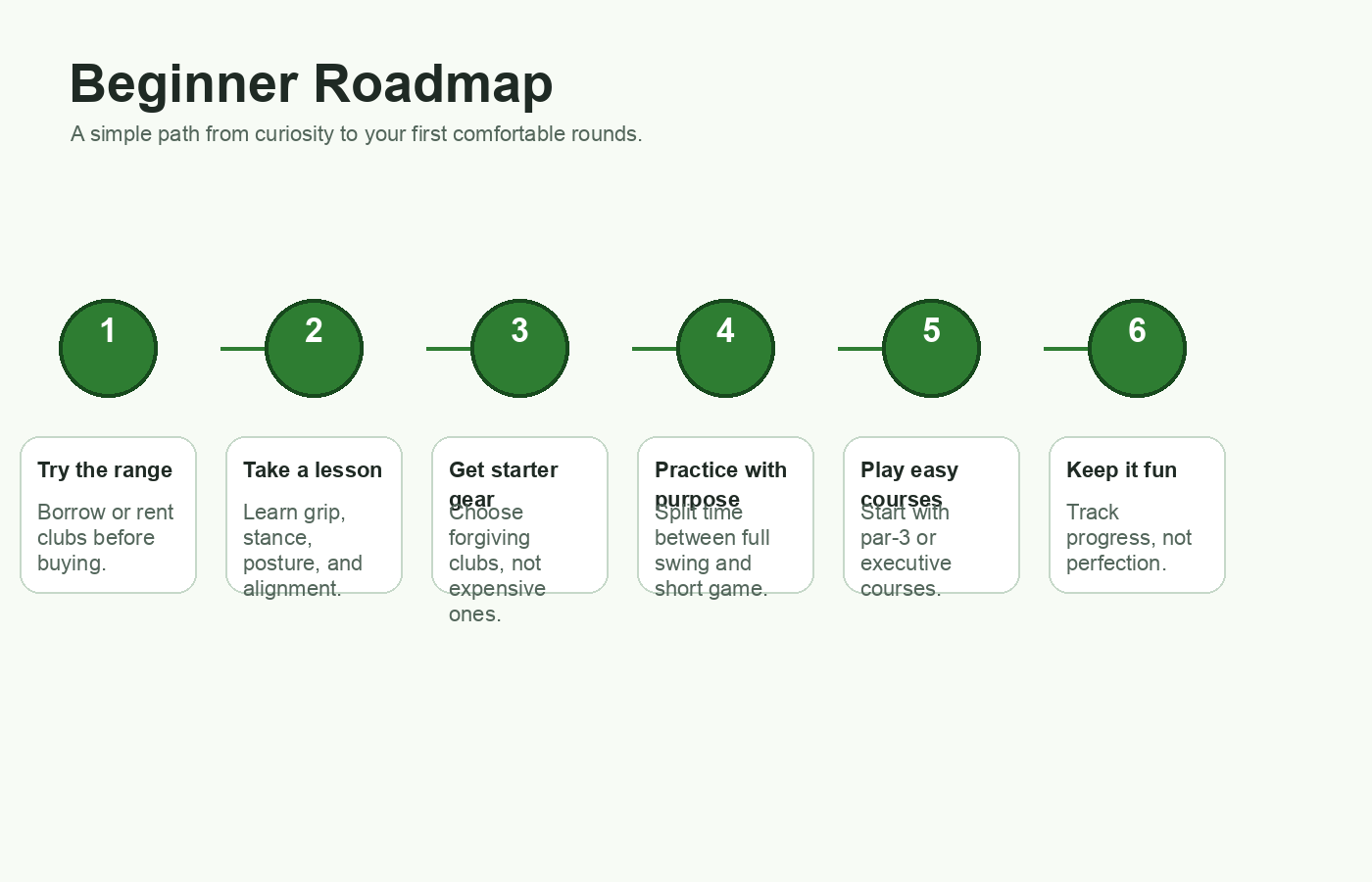
Try the range before buying a bag
Start with a bucket of balls and borrowed or rented clubs. Hit short swings first: little wedge shots, then a 7-iron, then maybe a hybrid. The goal isn’t to stripe every ball; it’s to feel the club brush the turf and learn whether you enjoy the rhythm.
If the range has targets at 50, 100, and 150 yards, use them. A beginner who can send a ball roughly toward the 100-yard sign is already building useful golf.
Take a lesson before habits harden
One or two early lessons can save months of guesswork. Ask the pro for the basics: grip, stance, posture, alignment, and a simple swing thought. You don’t need a tour-level move. You need a motion that gets the clubface back to the ball often enough to play.
Buy slowly and sensibly
Good starter routes include:
- Borrowing a set for a few weeks.
- Buying used cavity-back irons and a forgiving putter.
- Choosing a boxed starter set with a driver, hybrid, irons, wedges, and bag.
Skip stiff shafts and tiny blade irons for now. Forgiveness is your friend.
Practice the shots that show up most
Driver is fun, but wedges and putters rescue scorecards. Spend part of every session hitting 20- to 40-yard chips, then roll putts from three to six feet. Those shots happen constantly, and they don’t require huge strength.
A simple first practice:
- Ten minutes of half-wedge contact.
- Fifteen minutes with a 7-iron or hybrid.
- Fifteen minutes chipping.
- Ten minutes putting.
Choose friendly first courses
Par-3 and executive courses are perfect. You get real lies, bunkers, greens, and tee shots without 430-yard par 4s breathing down your neck. Play at quieter times, keep an extra ball in your pocket, and pick up when a hole stops being useful.